

Case study
StuPro
Product mentorStudent-to-industry learning mobile app
2025 · MentorBridge · Education · Product
Screenshots
StuPro in the wild
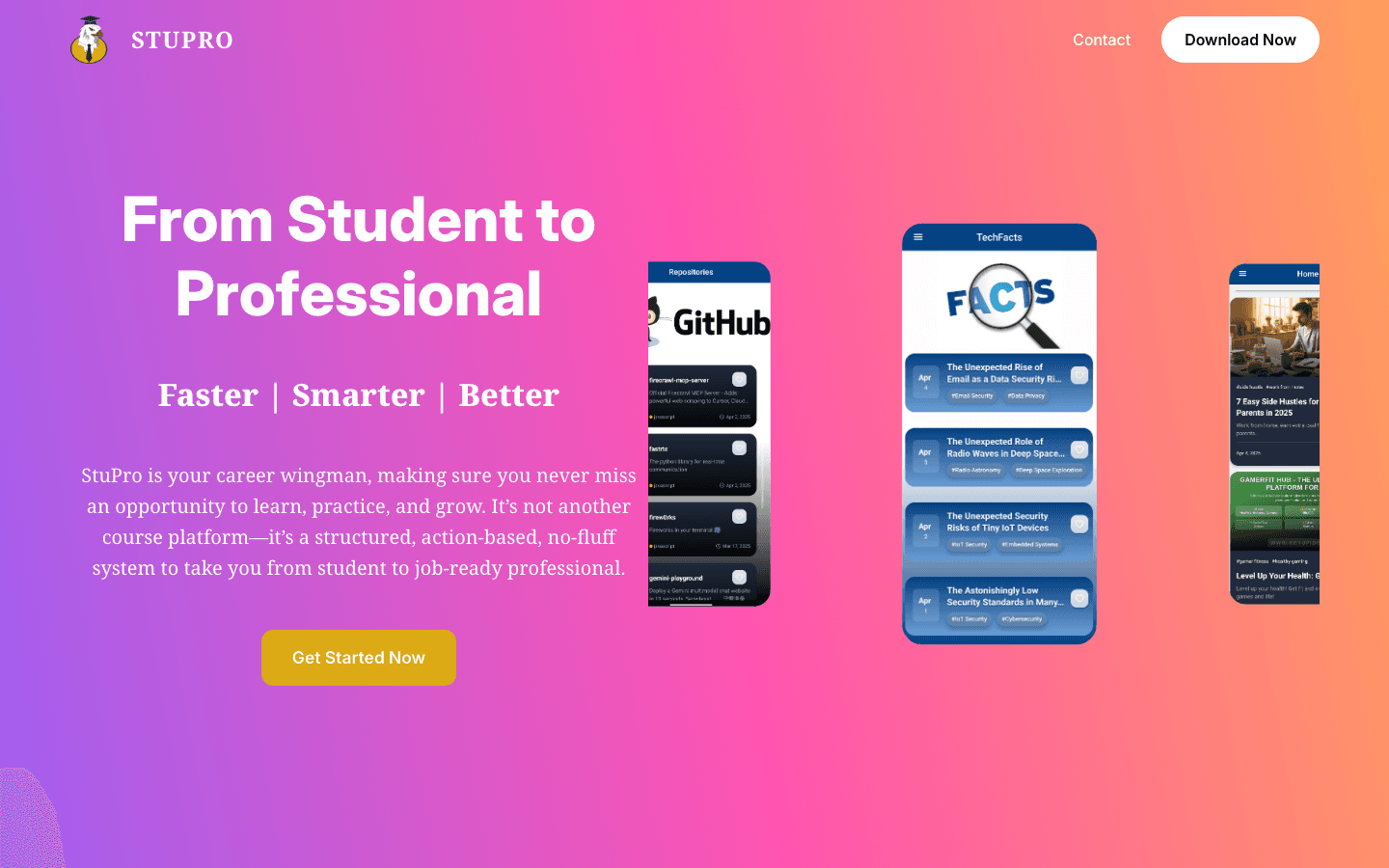
StuPro landing — from student to professional
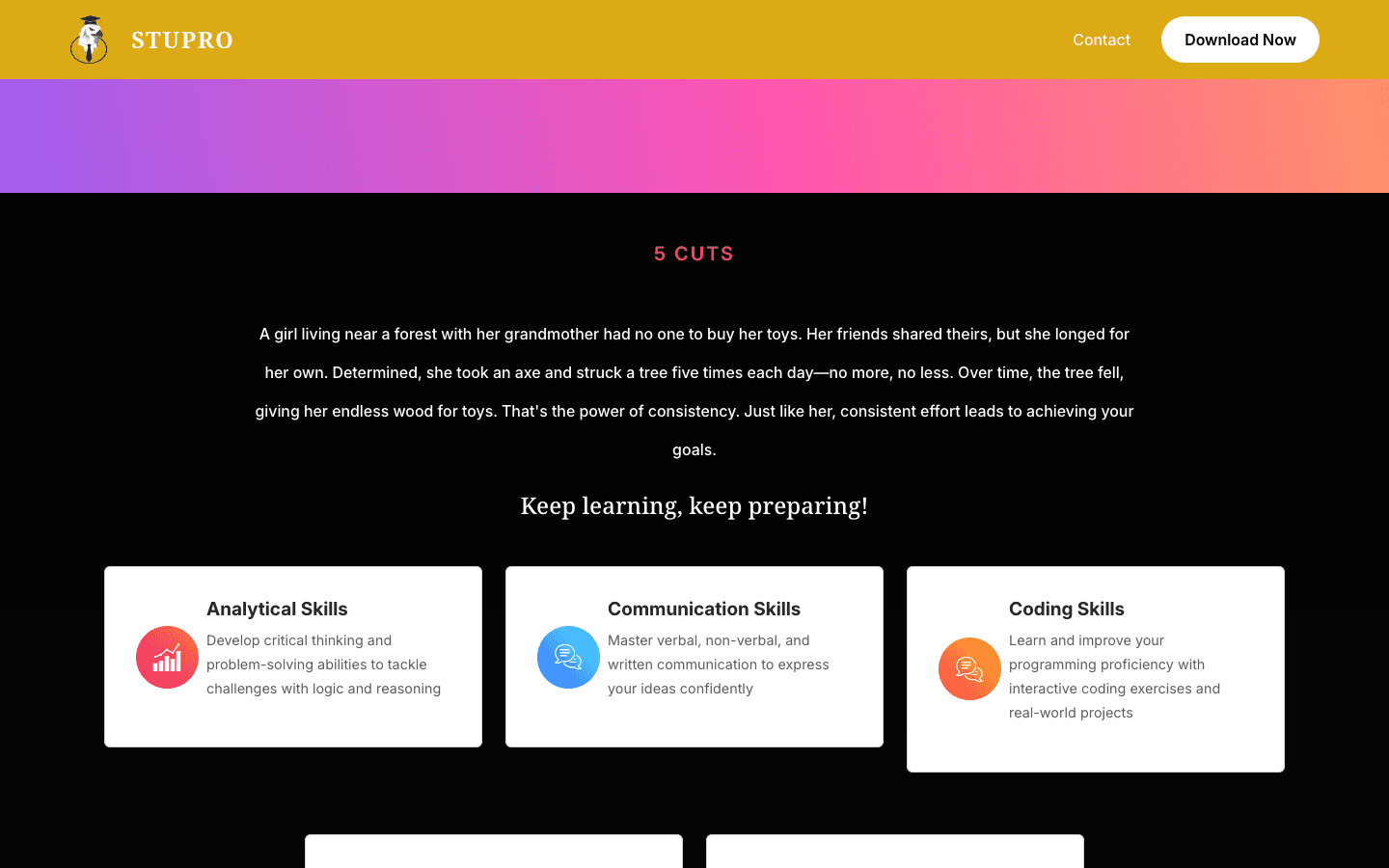
Need for StuPro - 5 cuts story
The choice
Teach topics — or teach how the job works?
Campus courses cover syntax. Students still struggle in interviews and first jobs because they have not practiced shipping real work.
The easy option
- Check off topics without asking students to show finished work
- Treat communication as optional
- Leave hiring prep until after graduation
What I chose
- Structure learning like real engineering work, with AI as a helper
- Practice shipping, reviews, and explaining the work
- Aim every path at the jump from student to professional
In short
Teach the work loop students will live in at a job — not only the programming language.
What I checked first
Does this help in a real job?
Practice should show up in interviews and in the first months at work — not only on a quiz.
Can a student prove they are ready?
There should be a portfolio or project they can point to, not only a course completion.
Can a mentor step in?
A MentorBridge coach should be able to review the work against industry standards.
The problem
Students and early-career engineers have plenty of ambition and coursework — but often lack structured tools for building portfolios, tracking growth, and navigating the leap into professional engineering environments.
While mentorship is important, it’s not enough without a unified product experience that brings learning, practice, and career readiness together.
What we built
StuPro is a productivity app designed specifically for students making the transition from academia to industry. It helps them strengthen real-world skills through clearer structure, practical resources, and mentorship-aligned workflows—all delivered on mobile devices.
Through MentorBridge, I led product direction and frontend practice, focusing on intuitive mobile experiences, performance, and industry-standard delivery habits.
Approach
- Student-first mobile UX that makes it easy to move from learning to doing, anywhere.
- Frontend leadership patterns mentees can apply as they build and scale their own mobile products.
- Close integration with MentorBridge curriculum and career readiness objectives.
- Incremental, feedback-driven releases so the app evolves based on real student needs.
Tools chosen
- React Native — enables building native mobile apps for both iOS and Android using technologies familiar to mentees.
- Component-driven UI — reusable mobile components that grow as features expand.
- Mentorship-backed delivery — regular reviews and coaching integrated into our development process.
Outcomes
A live mobile product that furthers MentorBridge's mission — giving students a practical tool for growing industry-ready skills, while providing engineers hands-on experience with delivering real apps.